LeeKooLuu backup cameras: see the bumper before you feel it
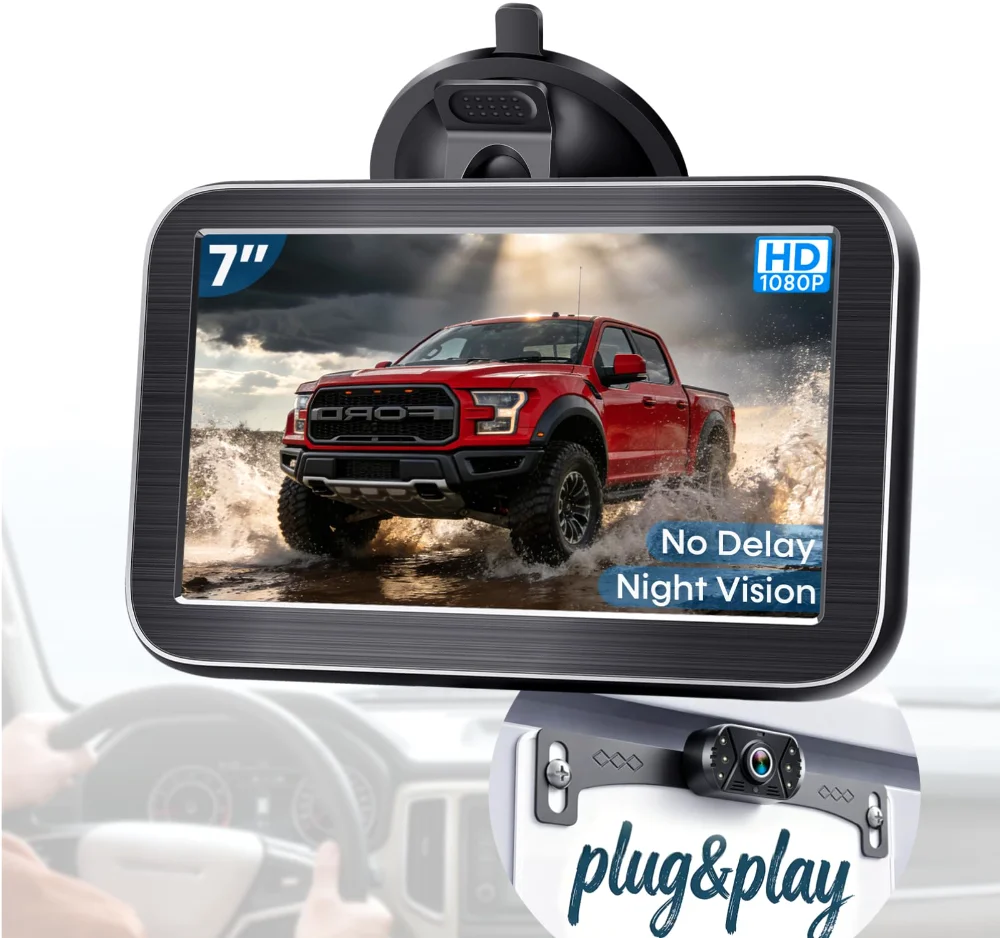
Reversing is the one maneuver you make without a view. These are the systems that give you one: a camera at the plate or on the roofline, a monitor on the dash, and either a wire you run once or a radio link that saves you the run. Here is the whole live range, with the screen size, what the case survives and the price against each.
Everything else on this page follows from this one choice, and it is not about price. Both kinds sit on the same shelves and cost within twenty dollars of each other.
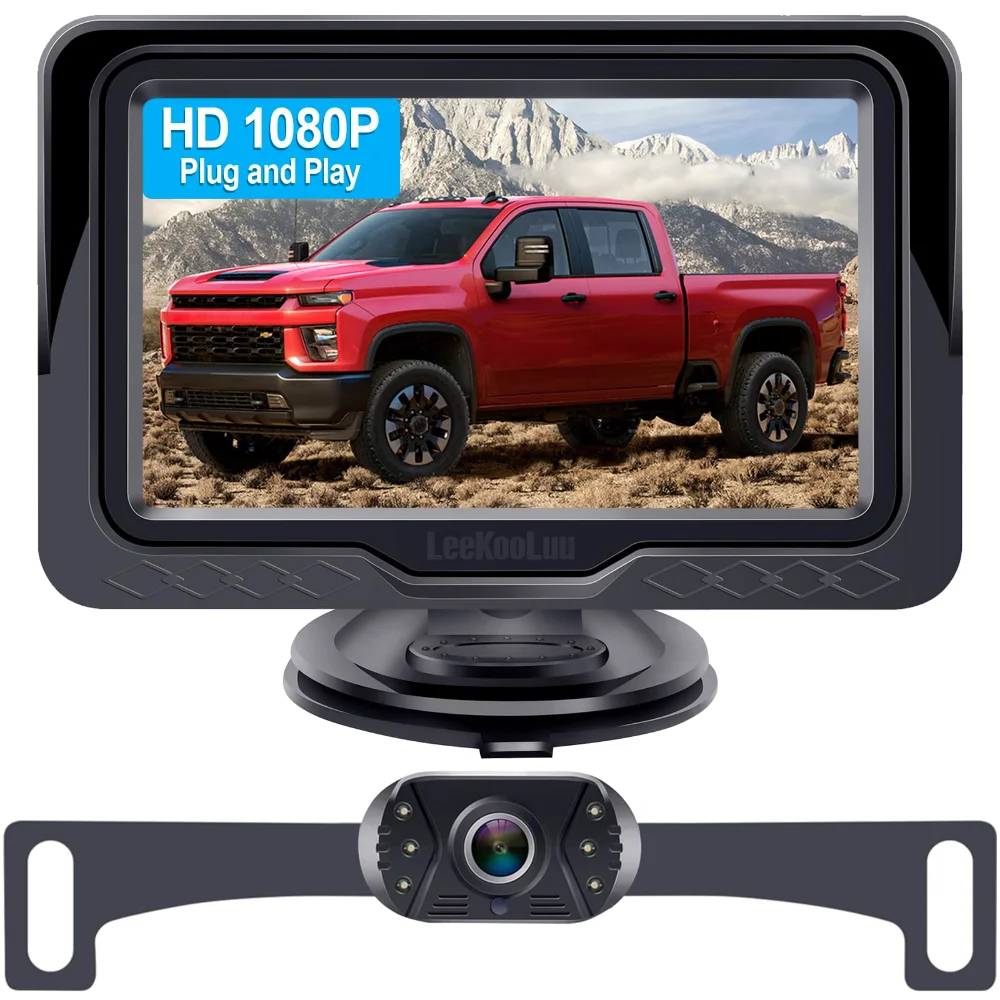
Run the wire when the car is a car
One thin cable from the plate to the dash, tucked under the door sill, and a picture that cannot drop out because there is nothing to drop out of. The trim over a sill lifts by hand on most cars, and the whole job is an afternoon at most.
A transmitter at the tailgate, a receiver in the monitor, and no cable through the cabin. You still power the camera at the back, usually off the reversing light. What you give up is a length of signal that has to cross a steel body, and on a long rig that is a real distance.
A car and a fifth wheel are two different problems, and the difference is not the camera. It is how far the picture has to travel and what it has to travel through.
The eight LeeKooLuu kits with a thousand ratings or more behind them
Each of these carries a pool of at least a thousand ratings behind it. They sit across the shelves rather than in score order, so a truck kit and a baby camera are both within reach here. Every card carries the screen size, what the picture does after dark and the price.
Every LeeKooLuu camera and monitor kit in one table
Every wired, wireless and RV kit in the LeeKooLuu catalog, on one screen: monitor, video, how the picture gets to the front, what the case is rated for and what it costs. Add-on cameras, baby cameras and cables have their own shelves. Tap a column head to sort by it.
Ranges are what the equipment is listed to and are measured in the open. A steel tailgate, a loaded trailer or a neighbor on the same band all cost you distance.
05
Shop by what you need it to do
Seven LeeKooLuu shelves, cut by the job rather than the aisle
Two shelves for a complete system, one for a rig, one for a camera added to a monitor you already own, one for the seat behind you, and two for the parts and the gear that are not a reversing camera at all.
Four things LeeKooLuu builds into a kit, and what each one is for
None of these makes reversing safe. LeeKooLuu standards are about getting a picture from the back of a vehicle to the front, and each one answers a complaint people bring to a camera.
01
A case rated for the weather it lives in
The camera sits above a license plate, six inches from a wheel that throws salt and grit. The cases here are rated IP69 and IP69K, which is the test for high-pressure, high-temperature washing rather than a promise about a puddle.
02
A picture that works after dark
Twelve of the pieces here see at night: some with infrared, which gives you a gray picture with no visible light, some with white LEDs, which keeps the color. The difference matters when you are looking for a curb rather than a wall.
03
Guide lines you can move
The lines on the screen are worth exactly as much as their alignment. On the kits that carry them, the lines shift up, down and out, so they can be set to your bumper rather than to a drawing of somebody else's.
04
A second camera when one is not enough
The monitors with split screen take two cameras and show both at once: one at the tailgate for hitching, one on the curb side for the parts of a van you cannot see from the mirror.
07
Asked for by name
The LeeKooLuu pages people search for
Each of these is a question people type in full, and each one has a page behind it with the pieces that answer it.
Most people arrive knowing they want a camera and nothing else about it. This page is that starting point: every complete kit in the catalog on one screen, with the monitor size, how the picture reaches the front and what the case is rated for against each. What it is not is a list of cameras. Everything on it is a whole system, because a camera without the monitor it was paired with is a wiring project rather than a purchase.
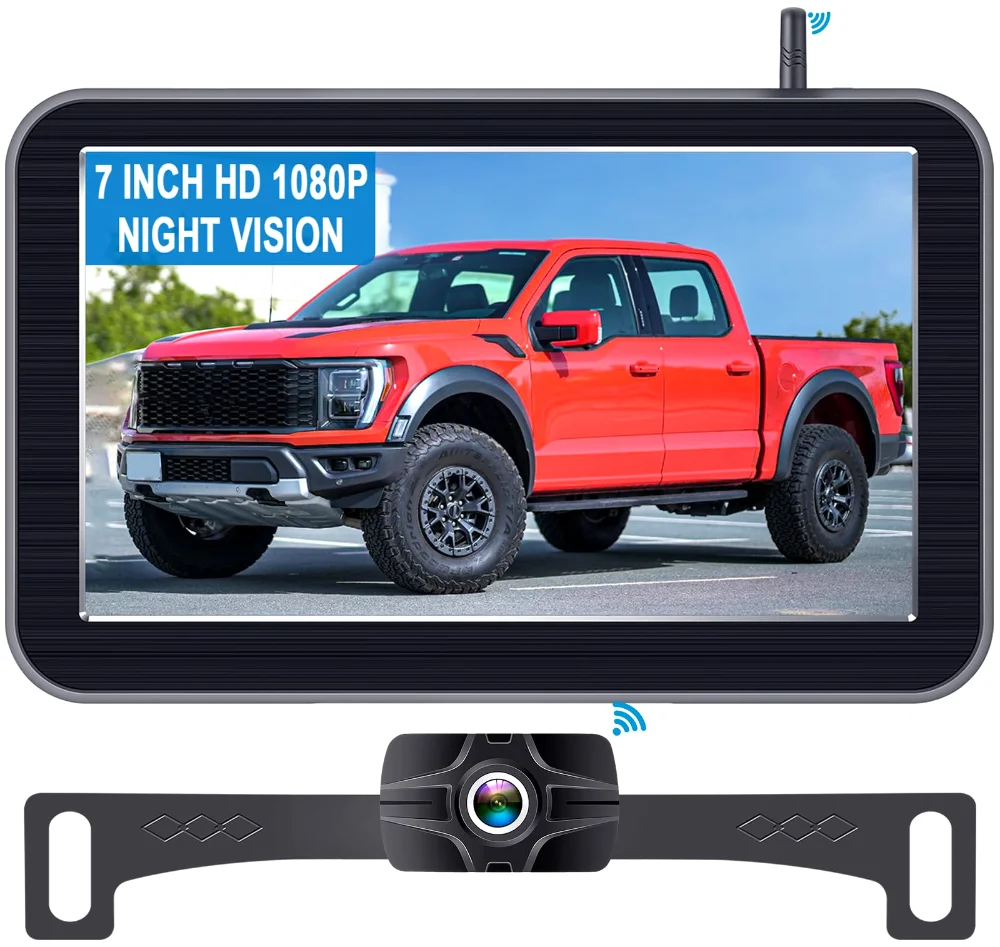
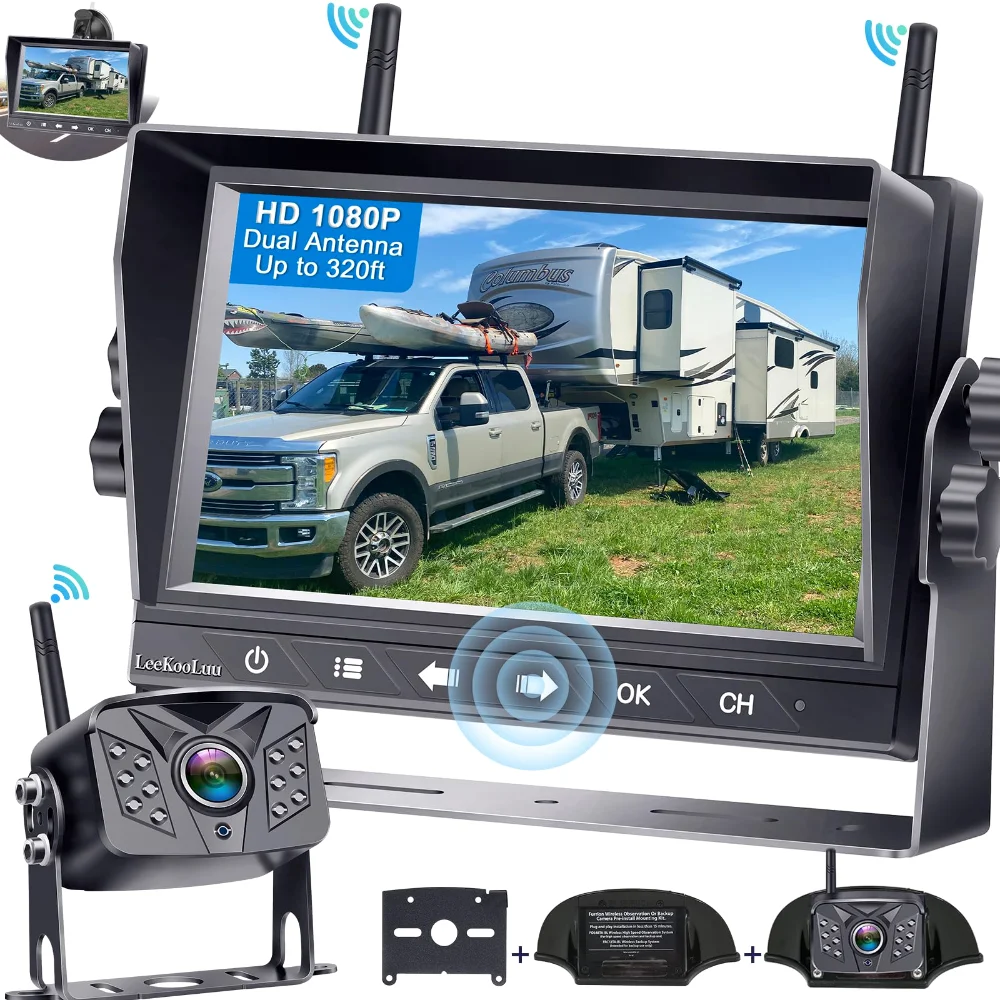
A wireless kit saves you the one part of the job people put off: the run through the cabin. The camera still takes its power at the back of the vehicle, usually from the reversing light, but the picture travels by radio instead of through a cable under the door sill. This page holds every system in the catalog built that way, with the range each is listed at, and the honest note that a rating measured across a yard is not the same distance through a loaded trailer.
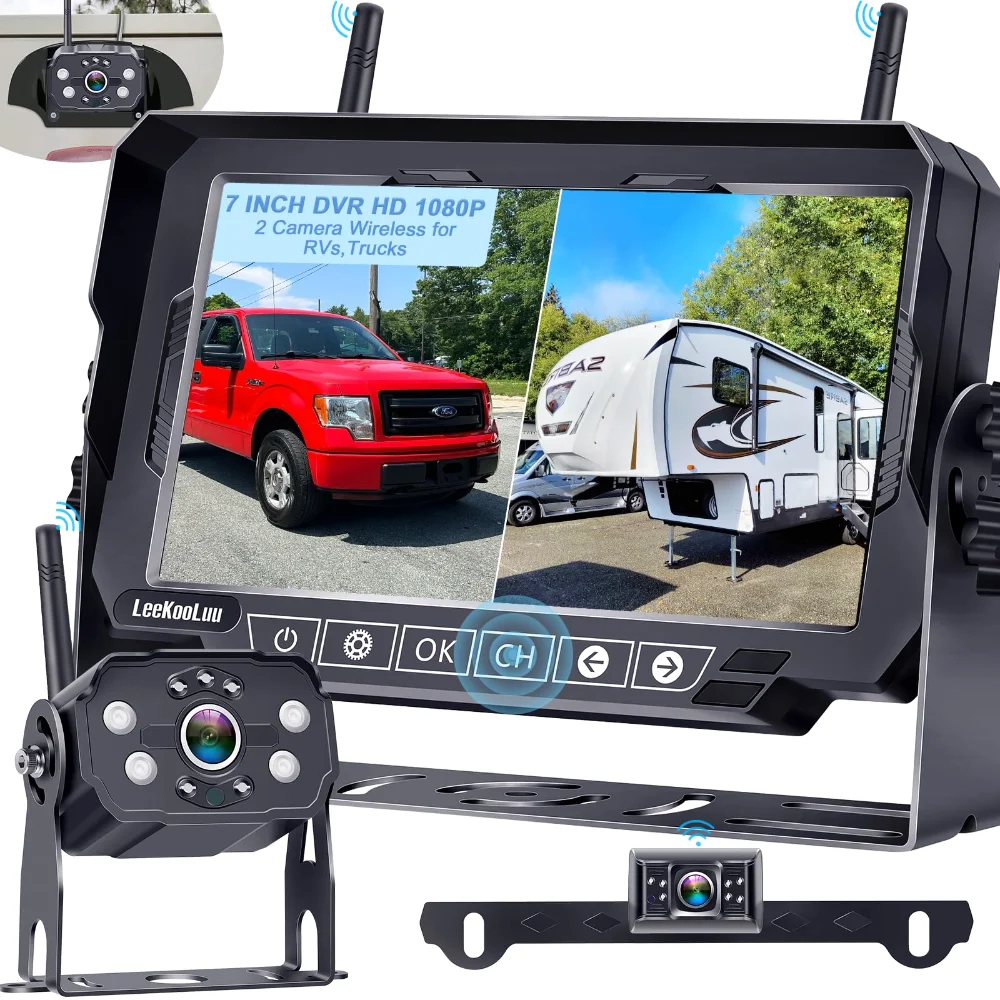
A rig is not a long car. The picture has to cross forty or fifty feet of aluminum, insulation and appliances, and you are often reversing alone with somebody standing exactly where the mirror does not reach. The systems on this page are the ones built for that distance, and the LK9 takes up to four cameras, so the curb side and the hitch can be on the screen together.
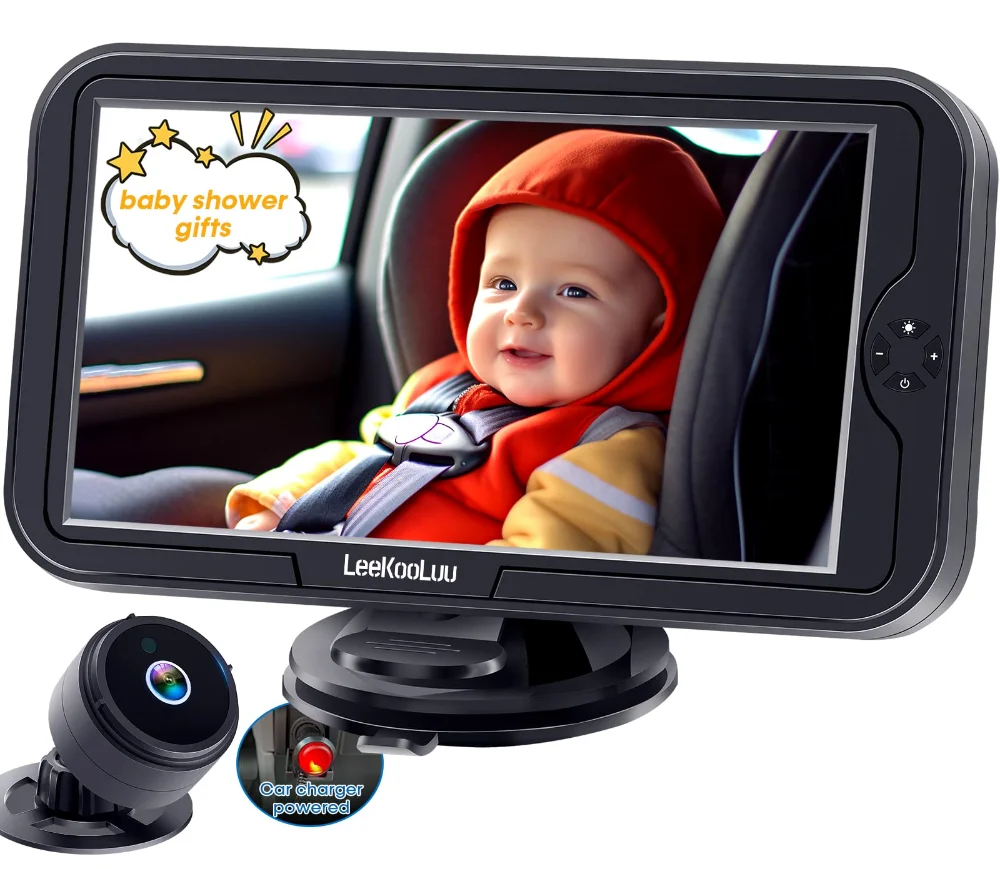
A rear-facing seat looks at the trunk, and the mirror trick gives you a small doubled picture of it in the dark. These are the same idea done with a lens: a camera clipped to the headrest strap, a 4.3-inch screen where a glance reaches, and color night vision when the cabin goes dark. The limit is worth saying out loud: a screen tells you a sleeping child is still asleep. It is not supervision, and it is not a reason to look away from the road.
Most of what goes wrong with a backup camera is decided before it is fitted, and nothing in the LeeKooLuu lineup changes that. Five minutes with a tape measure saves the second order.
01
Measure the run, not the vehicle
Lay a tape where the cable will lie, door sill to dash, and add a foot at each end. A pickup bed or a van swallows more than the guess: the video cables here come in 33 feet and 50, and the 50 is the one that reaches on anything longer than a car.
02
Decide where the monitor sits
A 4.3-inch screen goes on the dash without taking a corner of the windshield. A 7-inch is what you want if you tow, or if the dash is far enough away that you read the picture at arm's length.
03
Find the power before you buy
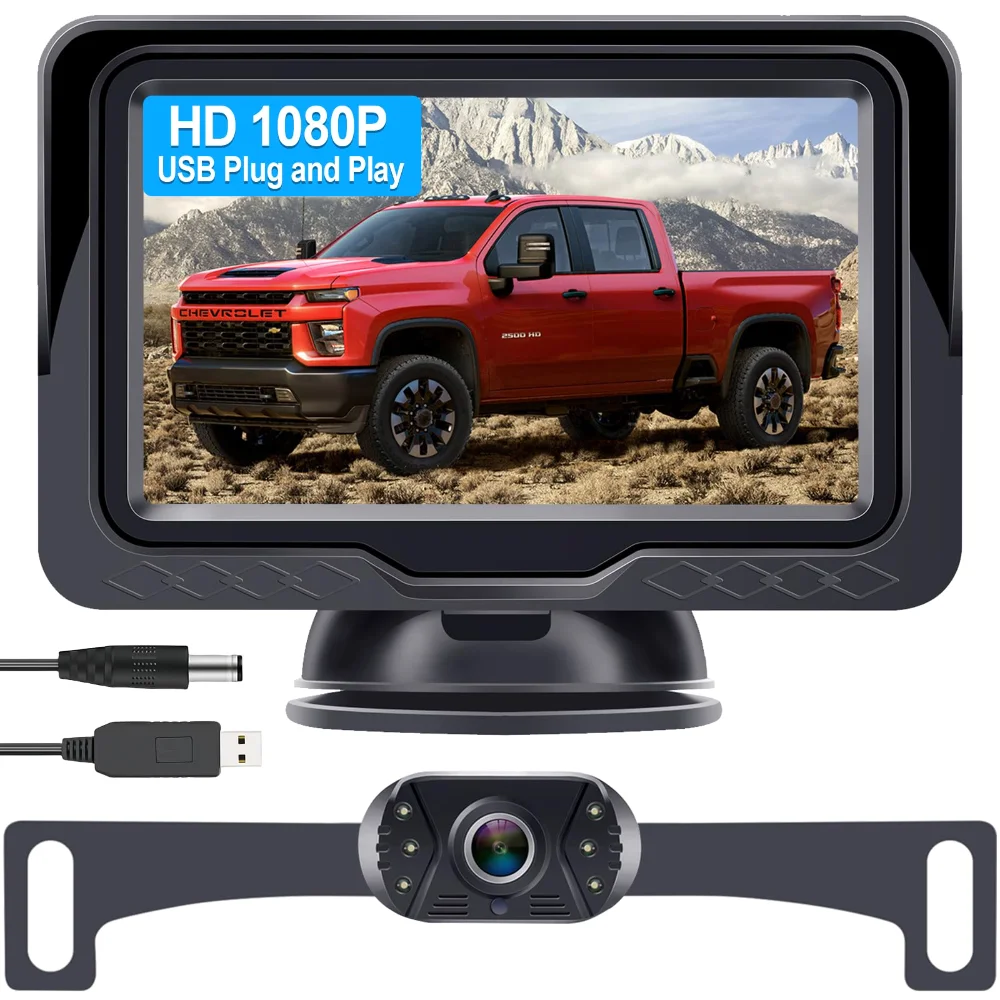
A monitor tapped into the reversing light only wakes in reverse. If you want the picture while towing, take one that runs off the 12V socket or a USB port.
04
Count the steel between the two ends
A radio link crosses a car easily and a loaded trailer badly. If the answer is more than thirty feet with a fridge in the middle, look at the RV shelf, where the links are rated in hundreds of feet.
05
Check the plate light and the frame
A plate camera sits in the frame above the license plate, and some frames sit proud enough to stop a tailgate closing. Open the tailgate and look before you drill.
06
Write the system code down
It is on the back of the monitor. Every cable, mount and add-on camera in the catalog pairs with a code, and it is the whole of the compatibility question.
09
Who we are
LeeKooLuu has been building the same kind of kit since 2016
The short version. The longer one, with the whole range set out shelf by shelf, is on the about page.
The people at LeeKooLuu make the camera you fit yourself. That is a narrower job than making cameras, and it explains the shape of the range: a small number of systems, each sold as a complete kit, each with a cable long enough for the vehicle it is meant for and a monitor that switches on when the vehicle goes into reverse.
What we changed, we changed once and kept. The cases went to a wash-down rating because the camera lives beside a wheel. The guide lines became adjustable, because a fixed line drawn for somebody else's bumper is worse than no line. And the cheap end of the catalog stayed cheap: the part that finishes the job is a twelve-dollar cable, not a new system.
Four guides worth reading before you touch a trim panel
What the wire actually does, what a radio link has to cross, where the camera should sit on a rig, and what the federal rule on rear visibility does and does not cover.
Every new vehicle under 10,000 pounds has had to show a rearview image since May 2018. Here is what the standard requires, and why an aftermarket kit is a different thing.
Questions people ask
What buyers ask LeeKooLuu before they order
Six of them. Longer answers live on the shelf pages and in the install guides.
Where can you buy a LeeKooLuu backup camera?
Every buying button on this site opens the kit you were looking at, in the configuration you chose, at our retail partner. That is where the payment and the delivery happen, and where the price you see is the price you pay.
The wide button at the foot opens the whole range at once, which is quicker if you are still deciding between a wired kit and a wireless one.
Will a LeeKooLuu camera fit your vehicle?
The camera mounts in the license plate frame or, on the RV kits, high on the back wall, and it takes its power from the reversing light. That covers cars, SUVs, pickups, vans, campers and trailers, which is to say almost anything with a 12V system and a plate.
The two things worth checking before you order are the length of the run and the clearance above the plate. Measure the route the cable will take rather than the vehicle, and open the tailgate to see whether the camera housing will foul anything when the door shuts.
Do you need to cut into your wiring for a LeeKooLuu kit?
At the back, you tap two wires on the reversing light: positive and ground. Most people do it with the crimp connectors in the box and no cutting at all. At the front, the monitor takes a 12V socket or a USB port depending on the kit.
If the vehicle is under warranty and you would rather not touch the loom, an auto-electrician will do the whole job in about an hour.
Can you see a LeeKooLuu camera picture at night?
Twelve of the pieces in this catalog see after dark. Some do it with infrared, which gives you a gray picture and no visible light at the back of the vehicle. Some use white LEDs and keep the color, which is easier when you are looking for a painted line rather than a wall.
Whichever you have, the picture is worth less than the headlights and the mirrors in the dark. It shows the ground behind the bumper, not the child who is about to walk into it.
How long does a LeeKooLuu camera take to fit?
The wiring at the tailgate is fifteen minutes. The cable run through the cabin is the rest of the job, and on a car that is an afternoon at most: the trim over a door sill lifts by hand, and the cable follows the same route as the factory loom.
On a rig it takes longer, because the camera goes high on the back wall and the power comes from the running lights rather than from a plate light six inches away.
Is a LeeKooLuu camera the same as the one built into a new car?
No, and the difference is worth knowing. A camera fitted at the factory is part of a system the manufacturer certifies against the federal rear-visibility standard, which sets what area has to appear, how fast the picture must come up and when it has to go away.
An aftermarket kit is not certified to that standard and this catalog does not claim it is. What it gives you is a picture of the ground behind the vehicle on a vehicle that never had one.
A camera shows you what is behind the vehicle. It does not stop the vehicle, it does not watch for you, and it cannot see what is not in the picture: a child crouched against the bumper, a bollard below the lens, a cyclist arriving from the side. Federal rear-visibility rules exist because reversing kills and injures people every year, and the bodies that write those rules ask drivers to look, to walk around the vehicle and to reverse slowly whatever is fitted. Nothing on this site is a substitute for any of that.
Every screen size, every cable length
Every screen size and cable length in the LeeKooLuu range sits behind this button, with the price from our last update against each one.